Hur vi satte scope för nya Tretti-sajten

När jag klev ombord på Tretti i mars 2015 såg jag liksom många behovet av att bygga en ny sajt för Tretti. Designen är utdaterad, innehållet rörigt och dåligt disponerat samt mobilanpassad lösning i stort sett obefintlig. Dock är det en snabb och funktionell sajt som med traditionell navigation. Dessutom är konverteringen helt ok. Konverteringen är ju det som allt egentligen handlar om så att argumentera för en remake endast baserat på dålig kosmetik fanns inte på kartan. Vi satte ett övergripande mål att höja konverteringen.

För att förstå var någonstans vi kan göra mest impact gjorde vi under hösten en konverteringsutvärdering med hjälp att stjärnorna på Conversionista. Det genererade en rapport på 127 slides med detaljer om hela tratten som besökaren går igenom, var den läcker och vad som kan åtgärdas. Det mesta i rapporten handlade om content, sök och checkout, dvs majoritet UX-områden på frontend-sidan. På backend skulle de kunnat lyfta fram saker som hastighet och instabilitet men där håller vi. Utöver rapporten har vi även studerat vilka funktioner som användarna använder och inte använder.

Med detta i ryggen har vi dragit igång sajtarbetet. Som alla på IT avskyr jag att kommunicera externa deadlines men vi har på oss att vi ska lansera en ny sajt i sommar. Vi är alltså begränsade i tid och budget, vilket gör att vi får jobba med det vi har och göra det bästa av det. Tur att jag är en fan av “embrace constraints” som 37 signals förespråkar; begränsningar hjälper oss att fokusera på det viktigaste.

Hur vet vi om det blir en succé? Konverteringen får tala sitt tydliga språk även om den med all sannolikhet kommer att gå ner i början när vi lanserar. Vi får hålla ett vaksamt öga på var det händer och iterera bort det. Jag återkommer förmodligen med en post på temat “att minimera risk”.

För att nå bättre konvertering finns det även några icke-funktionella krav vi har på nya sajten:

· ska upplevas minst lika snabb som idag

· ska ha kvar samma bra ranking i sökmotorer

· ska upplevas lättare och tydligare i navigation och disposition

· ska kunna anpassas till olika kundbeteenden på mobil, tablet och desktop

· ska vara personligare

Jag skulle vilja testa dessa och få metrics på var vi är idag och hur vi förbättrar oss i kundernas ögon, men till vilken omfattning vi lyckas genomföra detta och hur mycket vi endast lutar oss på hur vi bedömer det internt får framtiden utvisa.

###

Denna post är nummer 2 i en serie av 100 poster i utmaningen #blogg100 där jag fokuserar på hur vi skapar Trettis nya sajt.


Följ hela resan med Trettis nya sajt #Blogg100


Idag startar jag och några hundra andra bloggare årets utmaning; 100 blogginlägg på 100 dagar #blogg100! Utmaningen i sig är rätt så tuff – att orka skriva varje dag trots att vardagen kommer emellan. Det verkliga problemet är dock att prestera något som är värt att läsa!

Mitt uppdrag för #blogg100 blir därför att rapportera kring den nya sajten som vi håller på att bygga på Tretti.se. Ni som nyligen besökt sajten förstår varför det är dags för en enklare, mer säljande webb som funkar i alla typer av enheter.

Projektet drog igång nu i Januari 2016 och det det ska bli grymt kul att få dela med sig av hela resan! Ni som väljer att följa detta kommer att få veta hur vi tänker och resonerar, vilka framsteg och misstag vi gör samt lite allmänna reflektioner kring hur man bygger e-handel på skala. Det blir mycket kring agil utveckling, team, affärsanalys, konvertering och UX med andra ord.

Jag hoppas att många vill kommentera och ge feedback på det vi gör, så vi kan göra det ännu bättre!

Nu kör vi.

5 very real problems that hold back B2B startups

skyscraper
I have worked both at an enterprise size company and a startup trying to do business to business (B2B) sales. Here are my two cents on five problems you must overcome to succeed.

1) The “Everyone is a customer” problem

When you are building a product with a small team, you can’t afford everyone to be your customer. You just don’t have the resources. By narrowing it down to a segment or niche audience you are able to focus on the right customer pain points. Video ad server Videoplaza signed one of the biggest broadcasters in Sweden before even a line of code was written, and developed the entire product over 6 months in collaboration with that client.

2) Charge too Little

Microsoft can lock companies in for 12 months with $100,000/month with enterprise level software. SEO service Wincher charges €6/month. What’s the difference? Of course Microsoft has a future proof brand and an extensive support service. But also included are some consulting and training hours, and these are available for startups too. Set up your sales crew and start exploring your upsell options. In my opinion most startups charge to little, and Microsoft too much.

3) Not understanding how money works at Enterprises

Budgets are usually set once per year at a big company. Every department has a chunk of money to spend on investments like your company. Make sure you time it well in your sales cycle. Another strategy is to sell a basic trial for just under $500/month. A manager can usually charge this amount on her company credit card without hazzle.

4) Not recognizing the ecosystem

You need partners to grow your company. Get involved with the organizations setting the standards in your industry. They talk to all the big guys. If you are building your company on top of existing infrastructure like Facebook or Apple, you should get involved with them to get them to promote you to their clients. Later on, you can increase the value and reach of your product by letting other companies build upon it. Videoplaza has several ad format suppliers, ad networks, ad analytics companies and video players that have integrated with them.

5) Not preparing to go global

If you are in the US, China or India your market size will help you to get big, but if you are launching in a European country, make sure you are not just a local player in 5 years or you will be eaten.

Please add more deal breakers in the comments or social media!

Why I practice Code Therapy

code
For me programming has always been a very creative activity, like drawing, playing an instrument or gardening. There is something about sitting in front of a computer and realising that there are endless possibilities to create something almost magical, if I just put my mind to it and figure out how it works.

I started at a relatively young age of 14 to explore the different possibilities with Amiga and PCs. By then it was all about games and making pretty graphics float around on the screen. The big revolution came of course with the Internet and web browser. Thanks to HTML it became even easier to create something colourful and best of all; I could show it to anyone by sending a link in an email. Few things have blown my mind more than that.

These days I don’t work as a programmer any longer. I realised I would not be the best of what I did and I found it more compelling to focus on the business side of what the products could do, rather than the actual code writing.

So I practice what I’d like to call Code Therapy instead. I sit for hours on my spare time and build small products and services with the few programming skills I have. Sometimes I explore a new framework for responsive design or implement a small user login against a new database or test integration possibilities against different social media services.

I have probably about 50 or 60 unfinished projects on my computers. For some of them I of course initially thought they would make pretty decent products one day, but I did not have the time or motivation to finish them. About ten years ago this was rather depressing. Why could I not get my products out there? But I later realised that the products that I didn’t finish wasn’t really that awesome to begin with. And it wasn’t a waste of time. It was practice, it was exercising my brain, it was creative. Most of the code was also later used in other products, that did go live.

The most exciting thing about this is that when I talk to other developers, almost all of them are doing the same thing! They build stuff and leave it to grow old on their computers. It’s just early sketches. A part of their legacy as code artists.

For me the Code Therapy helps me understand what new technologies can offer and what business opportunities we can develop from it. Also it’s a way for me to escape reality and put my mind to work, solving a puzzle I created myself with pieces I find on the Internet.

I hope more developers will stop feeling bad about their unfinished projects and realise it’s not a waste of your time. It helps you grow. Personally I would never hire a programmer who was not coding on his/her free time. Please send me your thought via twitter or the comments below.

Photo by: Riebart

3 contradicting definitions of mobile strategy

“We need to go mobile”. Well, what does is mean? Here are 3 definitions of “mobile” that totally contradict each other, and you need to consider them all!

In a world where “mobile first” is a mantra for new startups and expressions like “adopt to mobile or die” scares and confuses the established market leaders I think it’s time to punch a hole in the bubble and define what we really mean.

1) The mobile technology

When is a device mobile? When you can carry it around? in that case, everything from laptops to mobile phones are mobile. But that’s rarely what we mean. We usually mean “mobile phones”, but the concept recently became more complex with tablets entering the arena.

What this really boils down to is that mobile phones and tablets are built on a different platform than old fashion computers with different user behaviour. We use touch and gestures rather than keyboard and mouse. We use apps over surfing the web. Your strategy for mobile technology need to include how your user will use your product. Are you building an app or a website. If you are using video or audio, is it in a format that is supported by mobile devices? Can you (and should you) use the same third party services like before, like ad server or analytics tracker?

2) The mobile screens

Screens in different sizes have been around since the dawn of Internet, and in the beginning it was a relatively small variety. With phones and tablets getting access to the internet, the previously rather small issue became larger and poured gasoline on the fire for trends like responsive web design.

Adapting to the different screens is not a mobile strategy, but we like to call it that because it’s phones and tablets that look bad. Today, there are hundreds of screen sizes – from smart TVs to mobile phones, so you need to have a scalable screen strategy for different ways of viewing your data in your app or website.

3) The mobile customer

Your customer can user your product anywhere. If they can’t you are doing it wrong. But with mobility comes lots of opportunities and considerations. Your users’ connection to the internet can vary a lot. They can use your product in the comfort of their home, abroad or for just five minutes on the bus.

For an e-commerce company this is particularly important. In what location and when are customers likely to develop purchasing behaviour. Are there some products that are more interesting when they are at work or at home? When are they likely to show something they found online to a friend? Are they more likely to discover a product on Facebook than on Google when they are on the bus? When will the customer complete a purchase transaction? Your strategy for the mobile customer has very little to do with technology and very much to do with marketing. Be sure to get the strategy right and know your customer.

These three perspectives are scratching the surface of ”mobile” and are closely tied to how we as consumers (and producers) are developing new user behaviours. I would love to hear your thoughts on this.

Picture by: Garry Knight (CC)

Product managers that create that special magic

product-stakeholders
Are you a product manager? Then this has definitely happened to you (and here’s what you can do about it).

Your product team starts developing a new user profile page. Mid development your system architect lets you know that this will impact the data caching and will add more development time. How much? It’s hard to say. The problem is really complex…

Next, your designer has finished the UI design. You both think it looks really good, but the designer added a few more data boxes to the design and you originally talked about. Alright, we’ll have to try and squeeze that in there.

Development continues, but is roughly aborted by the head of PR saying that we just signed a deal with a really important partner. It’s imperative that we rebrand our startpage asap to reflect this. Ok, some people are put aside to work on this.

Then everything breaks. Customer service get bug reports on that the payment process is broken. The CEO does not like the new user profile design. All development gets delayed. Team morale is at the bottom.

Who’s fault is it? Yours.

Being a product manager is about making hard choices, setting a strategy that benefits the entire company and making sure that all stakeholders are happy with this. In the case above (which we all experienced) the product manager failed to analyze and explain the implications of the different changes that came in from the side to the people suggesting them.

As a product manager you need to know the product by heart and still not be the domain expert in all the details. You must not be afraid to ask the question “Or what will happen?”. It’s really easy for a developers to say “We need to fix this or the site will break” or a PR manager to say “this partner is what will allow our business to take off”. As much as you need to trust their judgement, they need to motivate why, and how it will break or at what level it will benefit the company. The same goes with marketing, sales, pr, customer service and design. You need to get the processes in place to get the right information in the right time to make the right decisions.

To get past it’s a lot of work. You need to manage changed customers demands, internal politics, loud and passionate co-workers with huge pride in their individual work and the constant risk of making a bad call.

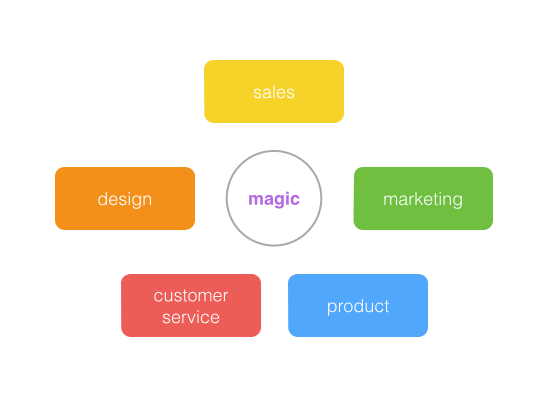
When all departments in the company are aligned with the product vision, that supports the company goals, and processes are in place to include ALL the stakeholders interests, that’s where the magic happens!

Time is always a Billion dollar opportunity

time

The old expression “Time is money” is true. Time is the only thing every person have about equal amounts of in this world and that’s why we get so frustrated when we are wasting it on something. Turned the other way around it’s also a master unique selling point for entrepreneurs.

Lew Cirne the founder New relic, also founded a company called Wily, built to make the programming language Java self diagnostic while running. This is pretty standard stuff these days but not when Cirne started. The product became a massive success, and why? The software saved hours of waiting and troubleshooting. As Cirne puts it “Good software doesn’t waste users’ precious time, and makes those hours spent in front of the screen more pleasant and more productive.” If you haven’t listened to his session on the Stanford Entrepreneurial Thought Leader series, do that.

Another good example is Spotify. When they launched there was already free music available online, via bittorrent and MP3 sites. What Spotify did was to make it a more convenient experience by offering you to instantly find and play a song, with a few clicks. Suddenly there was no need to surf endless sites cluttered with porn ads to find the best version of a favourite song, and then wait for it to download before you could listen to it.

Our time is most valuable when we feel we have little of it. We want to have time for both family and work, need to travel far or just to manage many projects at once. TechnologyAdvice.com is a company specialized in saving time for companies by helping them choose the right software platform for their infrastructure. Pricerunner and other price comparison sites focus on getting the best comparison on products, saving you hours of time to browse the web for reviews and information.

There are countless other companies that optimise for time. Google being the closest to mind spent the better part of their business getting the one thing you are looking before your eyes in a flash.

To save people time or make the time they spend valuable is an amazing opportunity to grow a really successful business.

The foolproof way to prioritise tasks in agile development

agile_impact_matrix
Which is the most important task to work on right now? When working in an agile environment, this needs to be crystal clear to everybody involved. Is it a newly discovered priority 1 bug or maybe the most critical feature for this sprint? Who decides? The product manager, the team or the stakeholder that shouts the most? I’ve seen it all in many organisations and then only way to get around it really is to agree on a way to measure what’s critical.

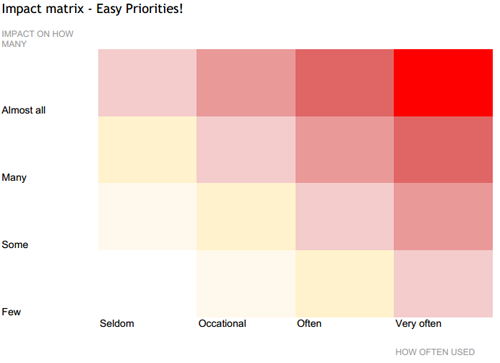
The impact matrix is one of many ways to prioritise among user stories, bugs and minor features and to me it’s close to foolproof. Why? Because any way you use this, it will make a big impact for your product and it’s also really easy to use.

Just ask these two questions for every task: “How many of our users will this affect?” and “How often will the average user benefit from it?” Then use the scales and place your task in one of the squares. Top right tasks are high priority!

You can do this during sprint planning or in the middle of a sprint. It doesn’t matter, because the answer should always be the same.
Here is a Google Doc with the matrix ready for you to use today!
https://docs.google.com/spreadsheet/ccc?key=0Ai4ooumOasgddF9kY3hkS1F3ai05REwwNDdZRWl5R3c&usp=sharing

For most tasks it will be easy to use it, and for some cases harder. For example: If you’re looking to build a tracking-feature that will allow marketing to acquire ten times as many users as before, this needs to be measured on that scale. Not that it’s 4 people at marketing using a feature often.

This is not my invention, but unfortunately I have lost the source (a blog post). If you know it’s origin, please notify me and I’ll add it. Also I’d like to test this on non tech work too, as it could be used in any department. Let me know if you’ll try it!

3 key reasons to why User retention is your most important metric

Cohort-Created-To-Signup-Problem_thumb

What’s Your most important Key Performance Indicator (KPI)? New users? Sales per day? Website visitors? I would argue that they are all secondary to User Retention, i.e. retaining users and make to come back after one day, one week and one month. Here’s why:

  1. User retention is the most accurate metrics to show that people like your product or service. As Nir Eyal puts it in his great book “Hooked”; You want to help your users develop a habit of using your product.  The higher retention you have in the long run, the happier your users are and the more likely they are to recommend your product to a friend.
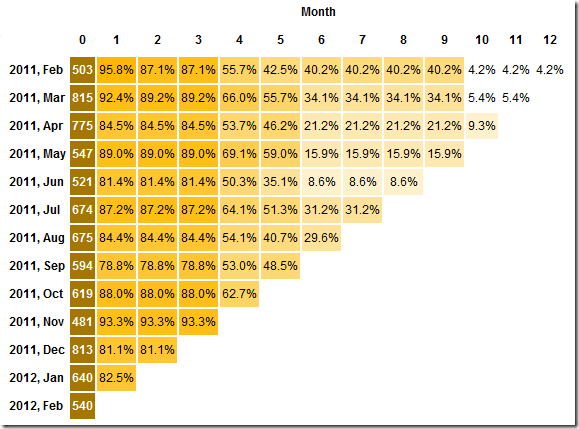
  2. Forget about new users for a second. It’s nice to see growth, but it’s worthless without people coming back. If less than 30% of your users are coming back one week after signing up or less than 20% of them are coming back after one month, then stop spending money on marketing and social media posts. Your funnel is leaking and you need to fix it. These numbers are of course different if you are selling cars on a website, then if you are trying to get people on board a new social network, but it’s a good ballpark figure.
  3. Sales and user retention are closely correlated. The more people are getting involved with your brand and your product, the more likely they are to buy something. If you constantly get them to come back to experience something new, reward them for their progress and create a habit, your sales will come.

So how do you do it? Make sure to set up proper cohort analysis of daily new users and track their 2nd day, 2nd week and 2nd month retention. How you define retention is up to you. In it’s basic form it’s just people coming back and opening an app or visiting a webpage. You could also tie it to some key product actions like logins or posting some user generated content.

Google Analytics can’t do cohort analysis (as far as I know), so I recommend you use a service like Mixpanel or Localytics.

Keep a lookout for your negative SEO

Logo_2013_Google
I just finished watching an inspiring session about SEO from Christian Rudolf at webbdagarna! I embedded it in this post. He highlights the growing trend of Negative SEO as one of the topics. Negative SEO is a highly painful disease that affects some websites. It usually comes from reckless link building strategies, but any site can really be a target of this problem that can basically kill your business. Listen to Christan talk about Negative SEO and two more topics ”that google don’t want to you know about” (in swedish).


3 SEO trender som Google inte vill att du skall känna till

Also, I’m back behind the keyboard blogging after a long brake. It feels good. :)