The 100 day marketing plan

Want some advice on how to market your startup or product? Well, here are my two cents based on a number good and bad launches. Basically you need a runway of 100 days to do all the preparations and create the buzz in good time. Usually you are on a tight or non existing budget so let me give you a plan where you pay in sweat instead.

100 days before the launch
Create your product pitch. Who is your ideal user of your product and what problem does it solve? How are you different from your competitors and how will you make money? Remember, be “Clear over Creative” when trying to explain what you do. Try it on a friend .

Also, figure out your credibility in the industry. Are you a serial entrepreneur or have other merits from your career? Do you have credible VC funding? Do you have or can piggyback on an important partnership with an organisation or individual?

90 days before the launch
Optimize your website. Make sure the copy and marketing messages are clear and compelling. Talk about the benefits for the user, not the features of your product. Add contact details and background story on why you are the best team to succeed in your area. Do the same for Facebook page, Twitter account etc.

80 days before the launch
Plan which 5 (at least) conferences or meetups you will attend before you launch. If you get to speak at one of them it is really awesom. Spread the word about your startup to fans, VC’s and journalists. Prominent people in your industry talk to each other. The more people that have heard about you by name, the more reason they have to talk about you. Also tech journalists often ask entrepreneurs and VC’s which companies are the hottest startups.

70 days before the launch
Build and launch a waiting list page for your product or startup; “Sign up with your email” Promote it to your network in all social channels. If people sign up it’s good validation that you are doing something good. Also, when people are talking about you they can recommend their friends to sign up for the waiting list.

63 days before the launch
Find 50 journalists or prominent bloggers that have written about your industry, competitors or potential partners. When they write about stuff that is relevant to you, make sure to contact them and thank them for a great article. It’s great way to connect without being intrusive. If you later find related content they would be interested in reading (not your site) attach the link and a few sentences around why this should be interesting. Also follow them on twitter or any other channels you can find.

56 days before the launch
Create send lists with 50-60 journalist emails, all of your friends AND 100 bloggers.

If you find it a drag digging up emails to bloggers and journalists, pay someone on Elance to do it for 50 dollars. It’s about 10-15 hours of work.

49 days before the launch
Learn about “how to spin a blog post

and “how to get a 1000 likes on an infographic”.

42 days before the launch
Host a dinner with some good people to establish yourself in the ecosystem of your industry. It’s good to do as an extension when attending a conference. Book a table for 7-8 people at a good restaurant. Book a few good names prior to the conference. Invite the rest as you meet interesting people at the conference. Hosting a dinner is a great way to build relations that matter and make a name for you and your company. Pick up the bill!

35 days before the launch
Write an email to 20 prominent journalists (that you have been in contact with) that you think might be interested in writing about your launch. Be casual. “Hi we are launching InstaProductify in about a month from now. Would you like to do an interview or be interested in covering the story? We’ve had great response so far and this will be an awesome launch. If not, let’s just keep in touch.” No more than that. Attach a link to your site and/or invite site.

If they want to do interviews, make sure to do them as soon as possible. You will not have the time the final week.

28 days before the launch
Write your launch blog post and/or press release. If you have the time, write two and ask a friend which one they prefer.

Make sure you make it easy for the journalist that will want to write about you. Prepare to attach screenshots, logos, founders photos etc. in the emails you want to send. Don’t force them to visit your site and download a 50 MB presskit with high-res photos. Make it easy to write about you.

21 days before the launch
Write the email that you will send to the people on your invite list. Write the email that you will send to friends and contacts in your network. Be sure to end the email with a call to action like: “the launch blog post will be at this link. Be sure to tweet about it on launch day!”

Write all social media posts that you want to push. Preferably three stages of the launch “Something is coming”, “Tomorrow is the big day” and “Today we launch! Boom!”

14 days before the launch
Guest blog. Find a blog that is a prominent blog in your industry or just has a lot of readers. Share your thoughts and experiences from building a product/startup or reveal some incredible insight that will disrupt your industry. Top 10 lists works amazingly well.

7 days before the launch
Email the journalists that you have been in contact with and give them the full story. Make
it easy for them to write about you as discussed in 28 days before the launch. Make sure to book any remaining interviews if you can. Also make sure you understand the journalists angle. Tech journalists probably asks you different questions compared to a reporter for a paper in your industry.

4 days before the launch
Create any ads that you might have prepared for Facebook of similar channels.

3 days before the launch
Email all the journalists on your list that you haven’t contacted yet, ONE BY ONE. Include their name in the greeting. Announce the launch, the elevator pitch about your product/startup and launch day. Include that the announcement is embargoed until the launch day. If they are serious journalists, they will respect that.

2 days before the launch
Email all the bloggers in bulk, or if you have the time, one by one. Do the same for your contacts/friends list. When you do bulk, remeber to put everybody in the BCC field, not the TO field. Showing your send list in public is unprofessional. I have done this when I was tired once and I got some angry emails back. Very embarrassing.

1 day before the launch
If you have done everything right, I don’t have to tell you what to do on this day. You will have tons of email to answer, launch copy to finalize and champagne to buy. If you can, go for a run or long walk to get the adrenaline out of your body and have a good nights sleep.

Launch day
Toast and smile.

14 days AFTER the launch
Blog and share the story about your launch. It’s a great way to extend the buzz of your launch with one more wave, to catch people who missed your launch or people (VC’s) that want to see you get traction.

God speed!

5 industries that are revolutionary disrupted by 3D printing

Imagine that you could reproduce any physical object. What would you chose? A key? A house? A nostalgic toy that you lost as a kid? This is where we are going folks.

matter_replicator

Printing solid objects from plastic is just the beginning. The printing industry is adding color, texture and new materials, that can be combined into any construction. Prices are dropping by the demand and the printers are getting faster and more accurate. Just like the Personal Computers entered our homes 30 years ago, these machines are soon everywhere.

Ok, but is this just printing in one more dimension right? Hell no. This is an internet connected replicator. Any object that you can download in ones and zeros, you can create. Here are five industries that will be turned upside down.

Cars and vehicles

You’ll never need to order another spare part for your car or bike. You or your mechanic can just create one on the fly based on the online 3D-repository of your car manufacturer.

Fashion and jewellry

Anything you can draw on your computer, can be created. Just design a garment on top of a size 5 3d-model. Let the computer calculate measures for the other sizes and you are done. You are ready to sell you collection world wide online and even let customers add custom modifications to details and cuts. Same with jewellery. Endless possibilities and it’s happening already. Artists are already manufacturing printed jewellery and selling in uptown shops in New York City.

Construction

This is the core of what 3D-printers do. Sure you can print spare parts, tools and even pipes or custom house interior, but the true revolution will appear when you can 3D print entire buildings. Imagine internet connected spider like robots sweeping back and forth, day and night with atomic precision. It’s all a matter of cost.

Transport and logistics

Scan an object in one location. Ship it digitally. Re-assemble it somewhere else. 200 years of international infrastructure will take a blow from this. It might not be tomorrow, or the year after but in a not too distant future. Commercial goods will not only be sold online, but shipped online.

Sex

Ok, I’ll leave this one for your imagination.

The battle cry for your startup

Let me tell you the story of why you are here, why you do what you do and why you will save us all.

2747581103_5f59f889d6_z

Friends and allies, we are on a mission.
The enemy is destroying our land. For too long have we stood by and let our brothers and sisters fall victim for the oppression of the tyrant <insert main competitor>. This beast has put his claws into innocent people all over the world and for too long has he ruled the world. But fear not. This beast is not a god. He can be hurt and even slayed.

The beast rely on his followers. We will free these followers one by one from his iron grip and bring them into the light. It has already begun. The first person to go free is Annie Appleseed. Annie is <insert target customer age> years old, <insert occupation> by trade and has a passion for overcoming <insert customer problem>.

We have given her the tools she needs to shine. Annie long walked in the shadows of doubt, thinking she would never be more than a peasant, never destined for greatness. We reached out to Annie through <insert primary marketing channel> and solved her agony with <insert your USP>. Annie rose and now stand tall. She donates <insert LTV> gold to help our cause as long as we stay true to our word.

Annie is just the first wave. Many more will join in but be careful brothers and sisters. The beast does not like rebellions. He will retaliate with furious anger and great force. Only by sticking true to our main advantage will we succeed: <insert competitive edge>. This is why the people will follow us.

We cannot do this alone. We are seeking allies in every corner of the world that will help us spread the message of salvation. We are forming a companionship with <key growth partner> to help us out. Even though they see the light their help will not come cheap. Fortunately we have received intel on that they need <insert partner benefit>, which we can provide.

Brothers and sisters. It’s time to pick up our weapons of salvation and free this land!
It will be a journey of blood sweat and tears, but in the end we will harvest the riches of our work and bring prosperity to our world.

To arms!

Product managers need the User Pain Story

pain
You are not building a product. No, you are not.
You are not building a service. No, that’s not what you do.

So what do you? You are helping another human being to be really great at something! (I’ve touched on the subject before) I’v been planning to write this post for a while, and now I will dig into practical advice on how to maintain true customer centric product development, and how to explore: “purpose”.

This is no revolutionary new idea, but it is really hard to do. In my experience a company has a Product manager or Creative director that is responsible for knowing what kind of features the software developers should be working on, based on customer needs (hopefully). It’s usually the features that is the main topic of discussion at the company meetings – how they should work and what constraints we need to consider (yeah, we do it at Osom too). Nothing wrong with that, except when the features loose touch of purpose.

So how can we make sure all product development is actually making the user kick ass at something?

The Scrum methodology deals with purpose somewhat by stating a user story with a clear business reason. The user story is usually described like “As a X, I want to accomplish Y, with business reason Z”.
Example: As a customer I want to list all my previous orders so I can print them for my accountant. This story is fine and the featured needed is fairly easy to estimate by a dev. The problem here is that it mostly describes activity and not purpose. We need another layer before this that evaluates that this is actually the best way to solve the customers problem.

Introducing: the User Pain Story

The User Pain Story: My accountant hates me because he has to wait for me every month to get a summary of our expenses and I don’t have the time to give it to him.

Suddenly there are lots of ways we can solve this pain story! We could get the accountant access to the previous orders listing or send him an automated monthly email with all the information he needs.

The pain stories are crucial to being a product manager. You don’t need to discuss pain stories in company wide meetings but you need to reflect on them personally or within a small group of product managers. You should gather information by talking to customers, doing user testing and comparing your product with competitors. With this intel you can formalise the vision of the product and develop KPI’s that makes sense to monitor your progress. The pain stories will help you determine the best cure for a customer problem, from a range of options.

Hidden Pains

Note that pains are rarely expressed explicitly by a user. You need to dig deep to find what is bothering them. A root cause analysis can take you pretty far when you talk to a customer.

Watching a user using your product and listening to them is the best way to collect valuable intel.

  • The first impression lasts. What does your tool do for a first time user. Can they accomplish the most important task within X minutes without training?
  • What’s the users work environment like? Any bosses or clients that depend on the activity performed by the user?
  • What is the most important pain killer to a major customer problem and is it intuitive to see why your tool will be the best cure?
  • Is there a part of a common work process that takes a significant amount of time?
  • Is there a way your product will redefine how users work in their organisation?

The product development process

Most well designed tools come from a developer’s understanding of the user’s pain and she therefore accepts the reason why a feature is proposed by the product manager. By using the Pain story as an example you will get a solid feature foundation and more clear discussions around a feature.

  1. Find your method of collecting user pains
  2. Write them down and discuss in a small group
  3. Come up with 2 or 3 solutions to each pain. Pick one
  4. Use the pains to plan and validate your feature backlog
  5. Go build amazing tools that serves a purpose.

From starting to working at – the story of Osom

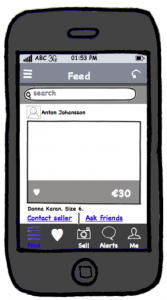
osom-wireframeI work at Osom. I used to say “I’m starting a company”, but these days I’m not starting, I’m working. So what’s the difference?
About a year ago, I met with Anton Johansson, at the time CMO at Twingly. We had lunch and talked about how much we loved startups and discussed the exciting companies emerging in Sweden. I had quit my job at Videoplaza just before that and was now looking for a new passion fire up my engine. Then we said goodbye.

A month later two Twingly guys popped up in Stockholm, Anton and Marcus. They wanted to start a company. I had never met Marcus before, but after meeting som 100+ devs in my life, I quickly realized that this guy was the real deal. We had a founding team, but what should we do? I joked about the founding of HP anecdote from Good to Great, where Hewlett and Packard in their original business plan stated who the founders were but had no idea on what the product should be or who the customer was.

We dug deep into what we knew, the trends of e-commerce and social, to find what we should build with our company. Eventually we found a personal need for a smooth, mobile classified ads service with focus on inspirational and social shopping. The idea of Osom spired and our level of excitement rose by the minute! We had fallen in love with the features and social behaviour of Instagram so this came be the foundation of our tool.

We talked about features, started making wireframes, threw away some bad ideas we had the week before and started playing around with a backend model. At the same time we started meeting with great people we know to toss the idea around and get feedback. We got great advice on how customer acquisition from the launch of Avito in Russia, great feedback on product UX from Spotify and great industry insights from leading classified sites executives. The honeymoon was over, and this was the wakeup call. This is much bigger and harder than we realized. I’ve heard this from entrepreneurs all the time and now I said it myself.

Focus. We needed to ship an awesome product and we needed lots of buyers and sellers. There’s a chicken and egg problem with marketplaces, that we needed to solve. We focused on getting sellers onboard. Still, this was a general idea and we needed to pin it down to a niche tribe of customers to start or spend a billion dollars on marketing. That’s not the startup way. To go big, you need to start small. After some analyzing we basically choose fashion and vintage enthusiasts which has a strong social community.

Ok, we had an idea and a founding team. We needed a name. We tried a great variety of names with embarrassing candidates like “Funk dunk”, “Papski” and “Nine Camels”. Yeah. I know… Then “Osom” came along. It grew on us and stuck. Yay! But wait! WTF? There is already an app in the App store with the name Osom. It’s some vague social media reputation thingie. Did we change the name? No. We choose another name in the App store. It’s more important to have a sticky name than a perfect domain name or app name.

So, how did we build the app? No one in our team was fluent in Objective-C at first. If we were to build an iOS app, we needed more people. I got in touch with Markus and Christoffer from a common connection (who I owe a beer). Both working with cutting edge iOS and Web development at Modern Times Group – Viasat. It was a great meeting and somehow I convinced them to meet with Anton and Marcus. The chemistry was there. After a couple of beers we had one of the best startup teams in Sweden and could start building a product for real!

Lot’s of things happend during the fall of 2012. We registered the company Osom AB, The Osom app lauched as a prototype. Anton pitched the idea at Pirate summit in Köln and won a price. We started putting people on the waiting list for the app to be launched at getosom.com.

osom screenshotIn 2013 awesome designer Eric joined the team and put the final spark in our app. We moved into our first office. Anton and I made Osom’s first public conference speak at SSMX in Stockholm.

Osom successfully launched in the app in App Store, April 2013.


And this is where the starting part ends.


Nowadays, I’m working at Osom. I’m doing customer acquisition, partnerships and managing our product development. I’m talking to users on a daily basis, feeling their agony and happiness. We are actually growing faster than I originally anticipated, but we have much more work to too.

It’s going to be a hell of a ride.

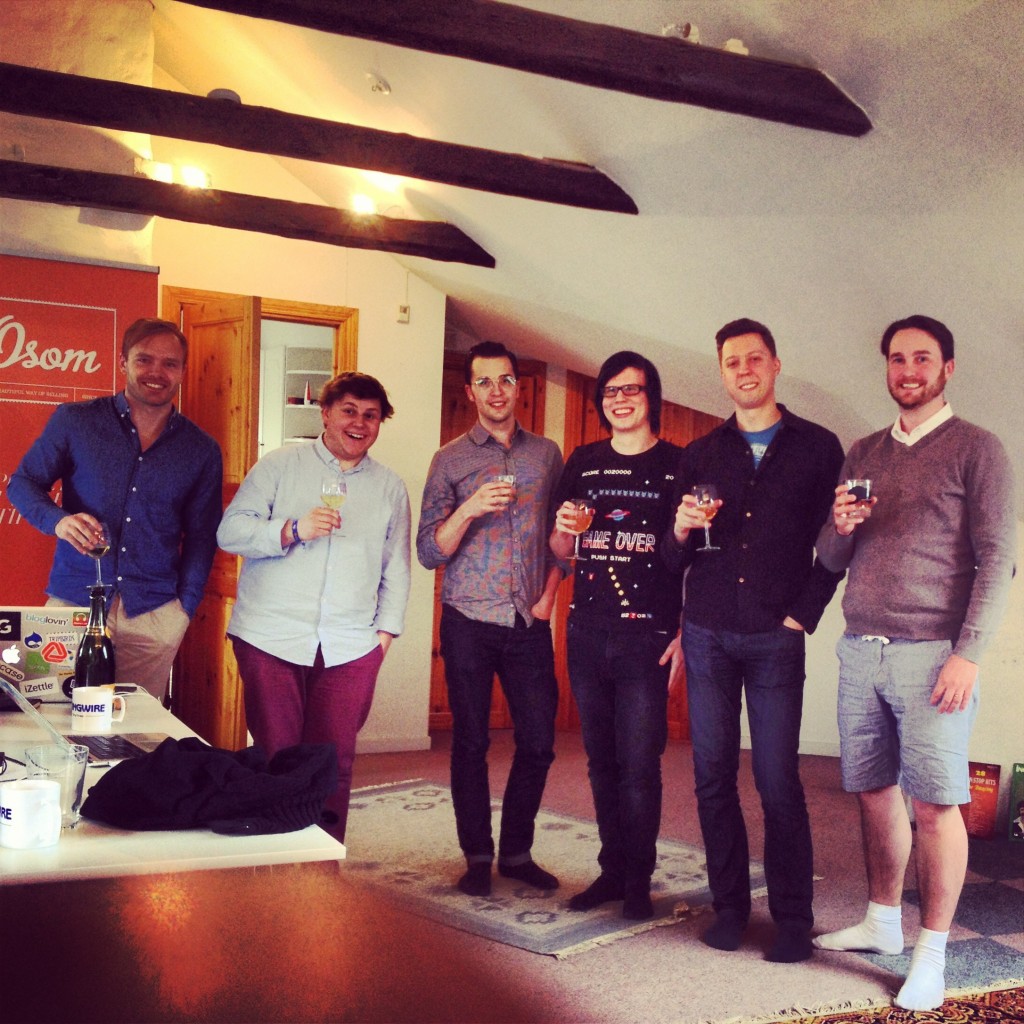
osom-group

Growth Case lessons learned from Billion dollar companies

http://www.flickr.com/photos/mdpettitt/2421792162/sizes/m/in/photostream/

How do you grow a company really, really big? I read this great article called “The Surest Way To Build A Billion-Dollar Internet Company”, by James Slavet, partner at venture capital firm Greylock. Slavet brings up the few companies (Amazon, Yahoo, Skype, Dropbox and others) that actually crossed the magical line of having a billion dollar valuation in the US and tries to deduct some key components on why these companies succeeded. His conclusion from looking at the companies reads:

the best way to create a consumer Internet company worth north of a billion dollars is to build a digital transaction business – a company that connects buyers and sellers so they can more efficiently transact.

This got me thinking.

The better part of the companies in the article fit under that description in one way or another. But is this what they set out to do in the first place or when did they find their path?

Paypal was originally two companies called Confinity and X.com. They were both in the financial space trying to solve email payments and beamed transactions between palm pilots, which were pretty much the iphone of that era. After a successful merger they founded Paypal. Thanks to Ebay, Paypal managed to grow a substantial loyal user base that even put Ebay’s built in payment service (“ebay payments”) out of business. Eventually Ebay acquired Paypal and the rest is history.

So what about Ebay?

In 1995 Programmer Pierre Omidyar built “AuctionWeb” as a part of his personal website. In 1996, they made a licensing deal with Electronic Travel Auction to sell plane tickets. The service grew phenomenally well and ran 2 million auctions in 1997. The company, changed it name to Ebay, raised some money and took the company public in 1998.

Among the more recent examples we find Dropbox and AirBnB, both yCombinator graduates.

Dropbox was founded by MIT student Drew Houston for his personal use. He then went through the yCombinator program with a bit of seed funding and launched at the Techcrunch50 conference. The service grew rapidly due to some clever viral features, like sharing folders with people that are not yet subscribers and getting more space by inviting friends and connecting more devices.

An then there was AirBnB. Brian Chesky and Joe Gebbia had a problem. They couldn’t afford expensive hotels when visiting conferences. As a way to make money and help out people visiting San Fransisco for conferences, they rented out air mattresses in their livingroom. As a bonus the founders launched a special brand of breakfast cereal which was a part of the Airbnb experience. The founders joined the yCombinator program and got famous for the concept of “growth hacking”, getting a lot of users from the Craigslist house rental section. The services grew and now, AirBnB has a global presence with a billion dollar valuation.

That’s it. Four companies that tweaked their path to grow where the clients appear.

Further reading:
Thiel in Talks to Invest in Airbnb at $2.5 Billion Valuation
Dropbox Hits 100 Million Users Says Drew Houston

Why your USP has nothing to do with your product

Ok, you’ve built a product and now you’re trying to nail the product’s Unique Selling Proposition (USP) to create a compelling marketing message. Let me stop you right there.

The first mistake we do is to treat the USP as a product feature. It’s not. The USP is about the customer. It’s either what the customer can do (or as Kathy Sierra puts it; Kick ass at) or it is what the customer can identify with.

The classic USP-question is “Why should I buy from you instead of your competitors?” The easiest way to solve that is to put your self in your customer’s shoes.

How to kick ass

We have several internal drives or motivators that are the reason why we do what we do. I’ll leave it for other bloggers to elaborate on the various drives, but in designing a product or service you must have an idea what the person using it is doing and feeling.

A game for example, may satisfy many different drives at different stages. MMORPGs can satisfy the need to be social in a safe environment with other people that share a common interest. It also let’s you compete and overcome challenges which gives you a sense of purpose and fulfillment. By getting better at playing the game you overcome even more difficult challenges and are fed with new obstacles into a continuous feedback loop of challenge and achieve.

The basic design is to quickly be able to kick ass at something and then find a route to master in small steps. Instagram is a good example. Snap a picture and add a filter. “Wow, my picture looks awesome. I want to share this with my friends”. Then you play around with filters, maybe read up on basic iphone photography or import photos from your DSLR camera to Instagram to kick ass even further.

When designing your USP, highlight what the user can do, or even better what results she can achieve. Another important step here is to “be remarkable”. Your USP had better be something worthy of remark, or at least cause a raised eyebrow of interest.

  1. Five guys playing on one guitar is remarkable
  2. Five guys playing without a guitar is just another acapella song

Your new screwdriver is not “ten times stronger”. You can “cut the build time of your new kitchen in half and leave time to be with your kids” or “if you are left-handed, you can now do your carpentry without getting blisters in your hand”.

The benefit is a verb.

How to identify with something

Should I buy a watch from Breitling or Casio? That’s easy! It’s a matter if you are rich or poor! Right? Well, what about Rolex, Breitling or Omega? The price difference is there still but not as obvious. It comes down to who I am and how I see myself. So you look at your friends but also the brand advertising. The latest James Bond actor is the poster boy for Omega and some American celebrity millionaire is showing of a gold Rolex on another poster. Who of the two do you like best? Who do you identify yourself with.

The USP in this case is a way for your customers to find a connection or bond to your brand, business or product without having a clear verb on why something will make me do something better. Maybe I feel superior no matter which product I use. “Hey man, stop trying to sell me an Android phone. I’m an Apple fan!“. You didn’t compare your apple TV to other Internet connected digital media receivers. You were wow-ed by your friend’s iPhone two years ago. So, you just KNOW Apple produces superior products…

The definition of a USP for your brand are values that run through your entire marketing from the choice of people representing your brand, to the tone in your advertising and graphical presentation. It should be something that the customer can identity with, feel safe with and rely on.

If you are having trouble finding values, try defining what the customer should feel when she encounters your brand or product or what is the first sentence coming out of their mouth is

  • Playful – Let me try!
  • Comfortable – Yes, I found what I was looking for!
  • Nostalgic – No way!
  • Intrigued – What’s that?
  • Shocked – WTF!?
  • Inspired – Wow, look at that!
  • Relieved – Finally!
  • Creative – I bet I can control this with my iPhone

That’s it for now. I will do a dive into who the customer is in a later post. Please comment on this.

14 sätt till snabba cash för sysslolösa ungdomar

CC by http://www.flickr.com/photos/68751915@N05/

CC by http://www.flickr.com/photos/68751915@N05/Jag har stört mig en del på den negativa, passificerande debatten om arbetslösa ungdomar på sistone så för att lätta på trycket kommer här 14 enkla tips för att tjäna snabba cash för ungdomar (och andra också) som alla kan klara av.

Kom ihåg att det som företag är superenkelt att be få ett mindre jobb gjort.

Betalar du ut högst 999 kronor under ett år till en privatperson behöver du inte göra skatteavdrag eller betala arbetsgivaravgifter. Du behöver heller inte lämna någon kontrolluppgift.
Mottagaren ska deklarera beloppet i sin årliga inkomstdeklaration.
/Skatteverket

999 snabba kronor inom research

Startups hinner inte göra research på rätt sätt. Hjälp dem att hitta rätt personer att kontakta och lära känna sina kunder och konkurrenter.

1. Googla fram 100 Twitter-konton till relevanta journalister och bloggare
999 SEK, < 10 h jobb.

2. Googla fram 80 email-adresser till relevanta journalister och bloggare
999 SEK, < 10 h jobb.

3. Googla företagets 5 största konkurrenter och punkta upp deras 5 senaste PR-aktiviteter + länkar till källor
999 SEK, < 10 h jobb.

4. Summera ”key learnings” från de 10 mest uppmärksammade (twittrade) posterna från ledande sajter om ett ämne de senaste 6 månaderna till en A4
999 SEK, < 10 h jobb.
Tips på ämnen kan vara: social media marknadsföring, e-handel konvertering eller något annat marknadsdrivet ämne.

5. Undersök de 5 största konkurrenternas prissättning och värderbjudande av 20 produkter. Gärna jämförande i Excel
999 SEK, < 10 h jobb.

6. Googla fram 20-30 leverantörer (inkl. kontaktuppgifter) av produkter som skulle kunna vara intressanta för en ehandel-sajt baserat på vilka leverantörer de ha idag.
999 SEK, < 10 h jobb.

7. Lista 50 potentiella B2B-kunder (och kontaktuppgifter) genom att lista svenska bolag filtrerade på bransch och årsomsättning på allabolag.se
999 SEK, < 10 h jobb.

999 snabba kronor som virtuell assistent

Spara tid och pengar för företag genom att göra det som inte ens hinner tänka på.

8. Boka 5 flyg/tåg till billigast pris på de fem största bolagen. 999 SEK för 3 månaders möjlighet att använda tjänsten oavsett om företaget använder erbjudandet eller inte.

9. Googla fram 5 mest prisvärda centrala hotell på 5 orter
999 SEK, < 10 h jobb.

999 snabba kronor som content writer / content video producer

Om du kan skriva tydligare och mer inspirerande än de flesta kan du tjäna pengar. Kan du inte skriva kan du lära dig med enkla knep.

10. Skriv korta och unika texter för 100 produkter på en e-handelssajt.
999 SEK, < 10 h jobb.

12. Skriv 5 användarmanualer eller produktbeskrivningar (ca 500 ord) om ett företags produkter eller tjänster som blogginlägg eller kunddokument
999 SEK, < 10 h jobb.

13. Filma 5 korta, säljande presentationer när du visar och pratar om en produkt (iPhone duger förmodligen) och lägg upp på Youtube eller ge till ett företag för egen användning – 999 SEK, < 10 h jobb.

14. 1 månad Facebook page admin för 999 SEK. Svara på frågor och kommentarer inom en timme. Kan även hålla liv i sidan och posta en bild eller kortare inlägg varannan dag.

Anställningslöshet är inte samma sak som arbetslöshet. Kom igen nu!
Det är fritt fram för företag och arbetssökande att använda mitt kommentarsfält nedan för att hitta varandra.

Why Agile Business Development is more effective

http://www.flickr.com/photos/rossbeane/965314248/sizes/n/in/photostream/

http://www.flickr.com/photos/rossbeane/965314248/sizes/n/in/photostream/Ever tried to find a partnership to help grow your customer base? Well, that’s one of the most important tasks for a business developer. This post focuses on that task and how to improve it by using inspiration and tactics from the world of agile software world.
Enter Agile Business Development.

To explain what agile business development is all about I’ll refer to the man that coined the term and presented it during an interview with Mixergy; Harley Finkelstein. He is the Chief Platform Officer at Shopify and has found great ways to use the analogies from the agile movement and apply them to building partnerships and business development.

Agile is about reacting to change and new business needs. Done is better than perfect and focus on collaboration over negotiation. If you haven’t watched/listened to the interview do it after reading this blog post. There is a link at the bottom.

What problem is Agile Biz Dev solving?

Usually partnerships can be a massive project that takes time and resources to come together. What agile does is to work in smaller steps, finding out if a relation works and if two partners have something to gain from each other. It gets something going fast. Finkelstein uses the metaphor “the teenage guy who tries to score on the first date” as the problematic methodology most commonly used in non agile biz dev. Use the following tactics to get more agile.

Stop wasting time. What are the objectives?

Skip the company presentation slides. You can send them in advance or after the meeting. Finkelstein describes a typical agile biz dev meeting as cutting right to the chase and trying to understand each other’s needs – “Here is my objective for this meeting. What is your?” Of course this can seem intrusive or aggressive at first but briefly explaining that this way has worked before (for Shopify) and that you don’t want to waste the other persons time.

Not every partnership is obvious on forehand. By stating the objectives you will develop a deeper understanding for your partners business.

Finding the centerpiece

The centerpiece is the beautiful vase or object that stand in the middle of the living room, which everybody can enjoy and talk about. It’s a common interest that makes us feel comfortable and more eager to work with each other. In Finkelstein’s example Gary Vaynerchuk was publishing his book “The Thank you economy” about the same time as Shopify was launching. As there were many key points in the book that also tied in with entrepreneurship and launching an e-commerce store, there were obvious gains in making Vaynerchuk one of the front heroes for the Shopify vision. This centerpiece was about evangelizing for entrepreneurship and increasing sales on both ends.

Finding the centerpiece is about doing research to find something that is going on right now, but also finding the passion and the driving force behind an individual or a company. It’s about identifying needs/passions, removing pains and increasing growth for others. Good examples are product releases, political stand points or in this case, a book release.

Start small and iterate

By suggesting collaboration around a small test run or a proof of concept, you gain tons of knowledge. It’s a low commit in time and money on both sides which is often key. If you perform well on the test your can use it to back a bigger project. Also, if the test fails or if your partner tries to screw you, you will have lost little compared to a situation of greater volume.

Leverage loyalty

Finkelstein refers to this point as a new type of “Greed”. He means that if you find people that are your fans you should encourage them. An Australian blogger that were sending Shopify lot’s of paying customers got a call from Finkelstein and a paycheck. They paid him retrospectively in cash according to their affiliate agreement to make him a loyal follower for the coming decade.

I don’t agree with Finkelstein on the payment reward. I think just the fact that he got noticed and contacted was worth so much more. By paying your contributors you turn them into employees and changing their incentive on why they want to help. Make sure to build partnerships with fans that last by making them feel special.

Don’t forget about timing

If you try to sell yourself on the same day as your potential partner is stressed out over a product launch, is leaving on vacation or just having a crappy day you are less likely to succeed. Your timing can be improved by simply following the news, monitoring when companies are likely to release new products or when authors are about to release books.

Relations, rejections and rebounds

This ties in with the Timing issue. If you catch your potential partner at a bad time it is likely that your will be rejected with no way to comeback. By offering a way out of your proposal without the partner loosing face, you can come back at a later time and be more successful.

The basic layup:
”I know you are super busy. I’m in town beginning next week. It would be great to meet you, but if you can’t that’s fine too”.

This works well for media relations too. You might have a strong PR message that you want to reach out with that is not a 100% relevant for one certain news site. Just offer a way out without destroying the possibility of future talks.

“I hope this is relevant. If not, I still hope I can buy you a beer on conference X this fall. “

That’s it. That’s the basics of agile biz dev. Please comment and add more discussion to this subject.

Mixergy link: http://mixergy.com/harley-finkelstein-shopify-interview-2
It’s probably behind a paywall but it’s worth paying for mixergy!

Så blir du Techcrunchad

techcrunch, mashable, nytimes and more logosHur får man in en nyhet i Techcrunch eller Mashable som startup? På Sweden Social Web Camp i augusti samlade Fritjof Andersson ett gäng startuprävar och journalister i en lada för att diskutera det här med PR för startups. Här kommer slutsatserna därifrån och lite erfarenheter från vårt jobb när jag var på Jalbum och Videoplaza.

Relationer med journalister

Om du inleder relationer med journalister och optionsbildare tidigt är det lättare för dig att får din röst hörd. Om de lär känna dig och uppskattar det du gör är det mycket mer sannolikt att de lyssnar när du har något konkret att få ut. Det behöver inte vara så avancerat. Försök träffa dem på olika events eller andra tillställningar eller skicka ett mail. Försök inte sälja på dem ditt bolag nu. Ge bort något; Ett tips om något de borde skriva om. En konstruktiv komplimang om något de skrivit om nyligen eller en introduktion till någon de borde träffa.

Be remarkable

Seth Godin förtydligar begreppet Remarkable till ”something worthy of remark” dvs. något som är värt att skriva om. Sätt dig i journalistens roll och titta på vad han/hon brukar skriva om. Du behöver inte bygga en jätte-disruptive tjänst, ta in $50 000 000 i riskkapital eller signa Mark Zuckerberg som styrelseordförande. Du kan släppa en rapport/infographic om ett område som många tittar på, kommentera en aktuell händelse med en stark åsikt eller posta en rolig tjänst på din sajt. Att ta rygg på befintliga samtalsämnen är också effektivt.

Kort och personligt

När du mailar en journalist med din nyhet måste du hålla det kort. Skriv en catchy rubrik i ämnesraden på mailet (inte ”pressmeddelande”) och beskriv sedan huvudpunkterna i er nyhet. Vill du ha lite tips på hur man är intresseväckande, har jag bloggat lite om det här.

Bifoga pressrelease eller länk till blogginlägg som en referens. Försök lägga en personlig touch på mailet. Att massmaila minskar chansen till en artikel.

Timing och uppföljning

Tisdagar och torsdagar, tidigt på morgonen har visat sig vara bäst tillfällen att få ut ett budskap. På SSWC debatterade vi dock om detta verklige är bäst eftersom majoriteten av PR-firmor jobbar efter denna regel och att det istället skapar ett brus som är svårt att nå igenom. Här gäller det att testa. Följ gärna upp med ett telefonsamtal till prioriterade journalister ”hej, jag skickade detta tidigare idag. Har du några frågor?”.

Långlivad press genom kampanjer

Om du ska göra en kampanj kan du få press i tre omgångar. Först berättar du vad det är för remarkable sak du ska göra. Exempelvis satte Red bull en man att hoppa fallskärm från rymden. Det blev en uppmärksamhetsstorm redan innan hoppet. Sen genom för du kampanjen med pompa och ståt. Efter en tid kan du skapa PR kring vilken framgång kampanjen blev.

Många av dessa tips kan appliceras för att få ett bra genomslag av innehåll i sociala medier också. Vill du veta mer om hur du blir retweetad och skapar relationer i sociala medier rekommenderar jag Jerry Silfwers nya post How to spin a blog post.